Is the Govee Uplighter Floor Lamp Still Good in 2026? Long-Term Review
I've been using the Govee Uplighter floor lamp for about ten months now, and after living with it in my living room, bedroom, and occasionally using it for simple video calls, I wanted to share a long-term, honest look at whether it still makes sense in 2026. I've had time to test the hardware, the app ecosystem, smart integrations, and the little annoyances that only surface with regular daily use. What I found was a mix of genuinely useful design choices and a few compromises that matter depending on how you plan to use the lamp.
Quick summary
In my experience, the Govee Uplighter is an excellent ambient and mood lamp for people who want big, colorful washes of light without a huge price tag. It excels at TV-bias lighting, mood scenes, and party modes. It is less ideal if you need accurate whites for photography or comfortable task lighting for reading. The app and smart integrations are convenient, but the software still has occasional quirks that I ran into during regular use.
What I tested and how
I used the lamp daily for about ten months (mid-2025 through April 2026). My test environments included:
- a 12 x 14 ft living room (TV-viewing and ambient light testing)
- a bedroom for wake/sleep scenes
- a small home-office for video call background lighting
I evaluated brightness, color behavior, app features, smart assistant integrations (Alexa and Google Assistant), build quality, heat and power usage, and long-term reliability. I also tested music sync and a few custom scenes I set up in the app to see how stable they stayed over time.
Detailed review and analysis
Build quality and assembly
When I first unpacked the lamp, assembly took me under 15 minutes. The parts fit together without force, and the instructions were straightforward. The base is weighted enough that the lamp doesn't feel top-heavy even when tilted slightly. After ten months, the finish on the pole and the top diffuser look the same as day one — no obvious scratches or paint chips even in a household where the lamp sometimes gets nudged.
One thing I appreciated was the cable management: the power cord routes cleanly along the pole and there's enough length to reach a nearby outlet without an extension. I did notice, however, that the plastic of the top diffuser is the thinner kind — it does a good job scattering light, but it's not as robust as more expensive designer floor lamps. If you're rough with furniture, it might show marks earlier than metal-and-glass alternatives.
Brightness and color performance
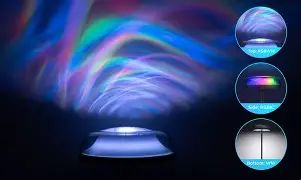
For ambient lighting, the lamp performs very well. The top uplight produces a pleasant wash on the ceiling and the surrounding walls, and the RGB LEDs along the pole can generate saturated accent colors. In my living room, a single lamp created a noticeably softer viewing environment and reduced eye strain during late-night TV sessions.
Where it stumbles is in white light quality. The warm-to-cool white range is useful for setting moods (warm for relaxing, cool for more alert tasks), but it's not the same as a dedicated high-CRI tunable-white fixture. I found the whites to be a touch green or magenta depending on the color temperature and brightness setting. For casual reading at low brightness it was okay, but for color-critical tasks — editing photos, accurate skin tones on video — it wasn't ideal. I also noticed a slight perceptible banding at very low brightness levels on certain colors, which likely comes from PWM dimming.
App and features
The Govee app is feature-rich: there are preset scenes, customizable DIY effects, schedules, and music sync. I used the scene presets for movie nights and created a few DIY effects that cycle through my favorite hues. Schedules and sunrise/sunset routines worked reliably most days — the lamp turned on and off at set times without fail.
Music sync is fun and generally responsive when used via the phone microphone or through the app's built-in analyzer, though it's not perfect. When I used it in a room with other noisy sources, the lamp sometimes struggled to match the beat precisely, producing pleasant but not professional-level reactive lighting. For casual parties and game nights it was a hit.
Shop the latest Electronics picks on Amazon.
See Deals →That said, the app isn't flawless. I experienced occasional delays in applying settings (a few seconds) and once or twice the app showed the lamp as offline even though it was still connected and controllable by voice. These glitches were intermittent and often resolved after reopening the app or toggling Wi‑Fi on the lamp. Over the months, firmware updates arrived and fixed a couple of stability problems; the company seems to update the product reasonably frequently.
Smart integrations and voice control
I connected the lamp to both Alexa and Google Assistant. Voice control is convenient for simple commands like "turn on warm white" or "set to blue," and for triggering scenes that I created in the app. The integration is not as deep as the Philips Hue ecosystem — for example, Hue's routines and ambient syncing with TV sources feel more polished — but for basic smart-home control, it works fine. I noticed a slight delay between a voice command and the lamp responding when the command involved complex scenes, which is expected for cloud-dependent integrations.
Energy, heat, and durability
After months of daily evening use (roughly 4–6 hours/day), the lamp has been reliable. It gets warm at the top after extended high-brightness use, but never uncomfortably hot. Power draw is modest; I've been running it nightly and haven't seen any power-related issues or strange smells. The LEDs have remained bright and consistent — no significant dimming or color shifts over time so far.
What bothered me
There are a few things that I found annoying in regular use. One is the white quality — if you need clean, neutral whites for office work or content creation, this won't replace a dedicated high-CRI lamp. Another is app bugginess: intermittent "offline" statuses and occasional lag when applying small color tweaks were a frustration. Finally, while the music sync is fun, it's not reliable enough for professional performances or tightly timed lighting effects.
Pros & Cons
- Pros: Great ambient and bias lighting; rich color choices; simple assembly and stable base; regular firmware updates; affordable relative to premium smart lighting ecosystems; useful app scenes and DIY options.
- Cons: White accuracy is limited (not high-CRI); occasional app/connection quirks; some low-brightness banding; diffuser plastic feels less premium than higher-end lamps.
Comparison: Govee Uplighter vs. Alternatives
| Model | Price Range | Smart Platforms | Color & White Quality | Best For |
|---|---|---|---|---|
| Govee Uplighter | Mid-range | Alexa, Google, Govee App | Excellent RGB; good whites but not high-CRI | Ambient lighting, TV bias, parties |
| Premium Tunable-White Floor Lamp | High-end | Alexa, Google, some local hubs | High-CRI whites; limited RGB | Reading, photography, accurate task lighting |
| Generic RGB Uplighter (budget) | Lower-end | Proprietary app / Bluetooth | Okay RGB; whites often poor | Basic mood lighting on a budget |
Who should buy the Govee Uplighter in 2026?
In my experience, the Govee Uplighter is still a solid pick for buyers who want dramatic, colorful ambient lighting without spending a lot on a premium smart-lighting ecosystem. Choose this lamp if:
- You want TV-bias lighting or a mood lamp to make a room feel cozier.
- You enjoy experimenting with scenes, music sync, and app-driven effects.
- You don't require studio-grade white light or color accuracy.
- You want voice control with basic scene triggers via Alexa or Google.
Don't choose it if:
- You need high-CRI, color-accurate lighting for photography or critical tasks.
- You prefer a fully local smart lighting solution without cloud dependencies.
- You need rock-solid app performance and instant scene switching for professional use.
Buying guide: what to check before you buy
Here are the practical points I looked at and recommend you verify before buying any uplighter-style smart lamp in 2026.
1. Color accuracy and white quality (CRI)
If you plan to use the lamp for reading, video calls, or content creation, look for a high CRI (90+). The Govee Uplighter delivers strong color effects, but its white rendering is only adequate for casual use. If perfect whites matter to you, opt for a dedicated tunable-white fixture instead.
2. Brightness and lumens
Check the stated lumen output and read real-world reviews. An uplighter that claims RGB brightness can still be dim for task lighting. In my living room, the lamp provided great ambient glow but not enough direct light for detailed work.
Discover deals on Electronics — updated daily.
Browse Now →3. App features and local vs. cloud control
Decide how much you depend on the vendor's cloud. Cloud control enables remote commands and richer integrations, but introduces occasional latency or disconnections. If you prefer local control and privacy, look for devices with local APIs or support for local hubs.
4. Smart assistant compatibility
Check that the lamp supports the assistants you use and what level of control is available. I found voice control convenient, but complex scene changes sometimes feel slow because of cloud round trips.
5. Build quality and size
Consider the lamp's footprint, pole height, and material quality. The Govee unit I used fit under my 8 ft ceiling without looking out of place and had a weighted base. If you have high ceilings, check for taller models.
6. Firmware updates and vendor support
Research how often the manufacturer provides meaningful firmware updates and how responsive their support is. My unit received a few stability updates that fixed minor issues, which I appreciated.
7. Additional extras (remote, schedules, music sync)
Decide if you need a physical remote or if app-only control is acceptable. The Govee Uplighter worked fine without the remote for me, but having one is handy for guests who don't want to use an app.
Real-world tips from my time with the lamp
- For TV bias lighting, place the lamp behind or beside the TV so the ceiling wash reduces eye strain without competing with the screen.
- Create a "movie" scene in the app with warm, dimmed top light and a subtle colored accent on the pole — that stayed stable for me and was quicker to invoke than re-tweaking each time.
- For better white balance on video calls, use the warm white at higher brightness and disable color accents; mixing RGB with whites creates odd skin tones.
- If you see a temporary “offline” status in the app, try toggling Wi‑Fi in the lamp settings or reloading the app; most of my problems cleared this way.
Final thoughts and conclusion
After nearly a year of regular use, the Govee Uplighter remains one of the easiest and most fun ways I've found to change the look and feel of a room quickly. What I appreciate most is how dramatically one device can alter atmosphere — from cozy warm evenings to colorful party mode — without needing dozens of bulbs or a complex setup. The lamp's strengths are its color range, app customization, and value for money.
That said, it's not perfect. If you need accurate whites, zero-lag professional lighting, or an entirely local smart setup, you should look elsewhere. The app intermittently misbehaved early on, and the white rendering simply doesn't match premium tunable-white fixtures. For everyday home use, TV bias lighting, mood scenes, and casual music-reactive lighting, the Govee Uplighter is still very good in 2026. It gave me months of reliable, enjoyable performance and continues to do so — with a few technical compromises I was prepared to accept for the price and flexibility it offers.