I Switched to the Netac Zx20 Ii Portable Ssd and Here is What Happened
Introduction
For laptop users, external storage is no longer a niche accessory. It has become a daily tool for students managing large assignments, remote workers transferring project folders, photographers backing up raw image libraries, and gamers trying to free up precious internal SSD space. In that context, portable solid-state drives have moved from being “nice to have” devices to essential extensions of modern laptops. The Netac Zx20 Ii Portable Ssd enters that conversation as a compact, performance-focused storage option aimed at users who want speed, portability, and convenience without stepping into the premium pricing tier often associated with better-known brands.
After switching to the Netac Zx20 Ii Portable Ssd, the biggest change was not dramatic in the way a new laptop or monitor might be. Instead, the shift showed up in everyday friction points. File transfers became less disruptive, backups felt easier to maintain, and carrying large working libraries between devices no longer required planning around slow external media. That is ultimately what many buyers care about: not synthetic benchmark bragging rights alone, but how a drive fits into real routines.
This article takes a close look at what the Netac Zx20 Ii Portable Ssd does well, where it may fall short, and who should seriously consider it. Rather than treating it as just another spec sheet exercise, this review focuses on laptop-centered use cases, overall usability, and the practical concerns that matter before making a purchase.
Netac Zx20 Ii Portable Ssd Overview
The Netac Zx20 Ii Portable Ssd is positioned as a fast, compact external SSD designed for users who want portable storage with better responsiveness than a traditional external hard drive. The appeal is simple: lighter form factor, quicker file access, faster transfer times, and better resistance to bumps than spinning-disk alternatives. For laptop owners who work in different spaces throughout the day, those advantages are meaningful.
In practical terms, this class of drive is best suited for tasks such as storing media libraries, moving large video projects, backing up documents and work folders, running portable app libraries, and expanding storage for thin-and-light laptops that ship with limited internal capacity. The Netac Zx20 Ii Portable Ssd is especially relevant for users whose laptops have modern USB-C connectivity and who expect external storage to behave more like an extension of internal flash storage than like old-fashioned archive media.
What makes the switch noticeable is not just raw transfer speed, but consistency. A portable SSD like this tends to feel more immediate when opening folders full of large files, copying batches of media, or duplicating a project directory before travel. It reduces the waiting that often accumulates in small but frustrating ways over a workday.
Design, Build, and Portability
One of the first benefits most users notice with the Netac Zx20 Ii Portable Ssd is how easy it is to live with physically. Portable SSDs are often judged by more than capacity and advertised speeds. Buyers care about whether the drive slips into a laptop sleeve pocket, whether the cable connection feels secure, and whether the enclosure seems durable enough for commuting, travel, or desk-to-café movement.
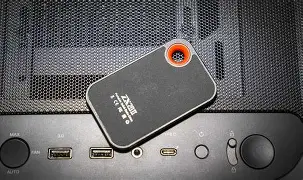
The Netac Zx20 Ii Portable Ssd follows the now-expected portable SSD formula: small footprint, lightweight body, and a minimalist appearance that works well in professional or casual setups. For laptop users, compactness matters because accessories add up quickly. A charger, mouse, dongles, headphones, and an external drive can easily turn a clean mobile setup into clutter. A drive that disappears into the bag without adding noticeable bulk earns real points.
Durability is another reason buyers prefer external SSDs over hard drives. With no moving parts, SSDs are generally better suited to life on the go. While that should never be confused with being indestructible, it does mean less anxiety about a minor drop, vibration during travel, or being moved around repeatedly between desks. For students or professionals who transport their setup frequently, that peace of mind is valuable.
Setup and Everyday Laptop Compatibility
Switching to the Netac Zx20 Ii Portable Ssd is generally a straightforward experience for typical laptop users. One of the reasons portable SSDs have become popular is their low-friction setup. Most users want a device that works quickly after plugging it in, with minimal formatting, no extra software requirements, and broad compatibility across operating systems.
In real-world usage, that kind of simplicity matters more than enthusiasts sometimes admit. Many buyers use external drives for immediate, practical needs: moving files from an older laptop, backing up coursework, creating a travel media library, or clearing space on a nearly full internal SSD. A drive that becomes available quickly and behaves predictably across Windows laptops, and often across other modern systems when formatted appropriately, tends to leave a better impression than one that requires troubleshooting right out of the box.
For ultrabooks and slim laptops with limited internal storage, the Netac Zx20 Ii Portable Ssd can effectively become overflow space for large folders that do not need to remain on the internal drive at all times. This includes video clips, archived design assets, downloaded datasets, and game installers. For creators working across multiple machines, portability also allows a project to travel with the user rather than being tied to a single computer.
Looking for the best Laptops & Computers deals on Amazon?
Browse Now →Performance in Real-World Use
Performance is the main reason to choose a portable SSD like the Netac Zx20 Ii Portable Ssd over a traditional external hard drive. But what matters in practice is not whether it wins every benchmark chart. What matters is whether it feels fast enough in the scenarios buyers actually care about.
In everyday laptop use, the improvement is most visible during large file transfers and repeated access to heavy folders. Moving several gigabytes of video, copying an offline work archive, exporting photo batches, or syncing project folders for backup all become much less disruptive when the external drive can sustain modern SSD-class performance. Compared with older hard drives, the jump is obvious. File copies that used to feel like interruptions often become short background tasks.
For students, one of the best use cases is keeping semester-long project folders or media-heavy coursework on the portable SSD. Engineering, architecture, and design students often work with larger-than-average files, and the difference between a sluggish external drive and a responsive SSD becomes apparent very quickly. Waiting for a presentation package or media folder to copy moments before class is exactly the kind of problem buyers want to avoid.
For remote professionals, the drive is useful for local backups and active file transport. Teams working with recorded meetings, slide decks, large PDFs, development environments, or creative assets often need dependable external storage that does not become the bottleneck. The Netac Zx20 Ii Portable Ssd is well suited to that role because it aligns with how laptop owners increasingly work: across home, office, shared spaces, and travel.
For creators, it can serve as a working drive for lighter editing workloads or as a shuttle drive between machines. While power users with extremely heavy 4K or multi-stream editing needs may still compare higher-tier options carefully, many casual and mid-level creators will find a portable SSD in this category entirely sufficient for project transport, backup, and media organization.
What Changed After Switching
The most noticeable difference after switching to the Netac Zx20 Ii Portable Ssd is workflow smoothness. Laptop users often do not realize how much time is lost to storage friction until that friction is reduced. A slower drive encourages procrastination around backups, selective copying, and constant internal storage cleanup. A faster portable SSD changes that behavior. It becomes easier to back things up regularly, easier to move large folders without second-guessing, and easier to treat external storage as part of a normal workflow rather than as a last resort.
Another practical improvement is confidence during travel. Carrying a lightweight SSD full of work files, media, or backups is much easier than carrying a fragile-feeling hard drive. The compact form also makes it more likely that users will actually bring it with them, which matters because the best backup or transfer drive is the one that is available when needed.
There is also a productivity angle. When a portable SSD is quick enough, users are more willing to keep large but infrequently used files off their internal laptop storage. That can help maintain cleaner local drives, reduce the need for constant deletion, and stretch the usefulness of laptops with limited built-in capacity.
Pros and Cons
Pros
- Portable and lightweight: Easy to carry in a laptop bag, sleeve, or everyday tech pouch.
- Faster than external hard drives: Greatly improves file transfer times and day-to-day responsiveness.
- Useful for limited-storage laptops: Helps expand working storage without opening the machine or relying on cloud access.
- Better suited for travel: SSD design is generally more resilient to bumps and movement than spinning-disk alternatives.
- Good fit for common modern workflows: Backups, media libraries, project transport, and document archives all benefit.
- Low-friction setup: Portable SSDs in this category are typically easy to plug in and start using quickly.
Cons
- Performance depends on the laptop port: Users with older USB ports may not see the drive’s full potential.
- Not every buyer needs SSD speed: For long-term cold storage, a larger external HDD may still be more cost-effective.
- Capacity pricing can matter: Buyers comparing multiple capacities should weigh price per gigabyte carefully.
- Heavy professional editing users may want more: Some advanced creators may prefer premium drives with stronger sustained throughput or added ruggedization.
- Cable quality and included accessories matter: Real-world experience can vary if the included cable is short or if adapters are needed.
Comparison Table: Netac Zx20 Ii Portable Ssd vs Typical Alternatives
| Feature | Netac Zx20 Ii Portable Ssd | Typical External HDD | Premium Portable SSD |
|---|---|---|---|
| Speed | Fast enough for everyday transfers, backups, and media work | Much slower, especially with large file batches | Often faster, especially in sustained heavy workloads |
| Portability | Very compact and easy to carry | Bulkier and heavier | Also compact, sometimes with more rugged build |
| Durability | Better than HDD for commuting and travel | More vulnerable to shock due to moving parts | Often strongest, especially rugged models |
| Value | Appealing for buyers who want SSD convenience without overspending | Often cheaper per gigabyte | Usually higher cost for brand, speed, or rugged features |
| Best For | Laptop users wanting fast, portable external storage | Budget-conscious bulk archival storage | Power users, pros, and demanding creators |
Who Should Buy the Netac Zx20 Ii Portable Ssd?
The Netac Zx20 Ii Portable Ssd makes the most sense for buyers who want a practical storage upgrade for a laptop-centered workflow. It is especially suitable for people who regularly move files between devices, run out of internal storage, or want a backup solution they will actually use because it is small and fast enough to stay convenient.
Students are a strong fit. Many modern laptops aimed at education or portability offer limited internal storage. A fast external SSD can hold research archives, class recordings, editing projects, coding environments, and personal files without slowing work down.
Remote and hybrid workers are another ideal audience. Those users often move between home and office, and they need fast access to presentations, project folders, media assets, and secure local backups. A portable SSD is one of the simplest tools for keeping work mobile.
Photographers and casual video creators can also benefit. Even if the drive is not the ultimate solution for the heaviest production workflows, it is highly useful for carrying raw files, creating backups in the field, and moving projects between a laptop and desktop setup.
Looking for the best Laptops & Computers deals on Amazon?
Shop Amazon →Everyday users with small internal SSDs may appreciate it most of all. A lightweight ultraportable laptop becomes much easier to live with when large files can be moved to a fast external drive without making the overall experience feel compromised.
Buying Guide: What to Check Before Choosing This Drive
1. Laptop Port Compatibility
Before buying the Netac Zx20 Ii Portable Ssd, users should confirm what ports their laptop has. This is one of the biggest real-world factors in external SSD satisfaction. A fast drive connected through a slower or older interface may still work perfectly well, but it may not deliver the performance buyers expect. Matching the drive to the laptop’s port capability is essential.
2. Capacity Needs
Buyers should think about actual storage habits rather than just choosing the cheapest option. Someone storing documents, schoolwork, and occasional media may need far less capacity than someone archiving photos, large games, or video footage. It is smart to estimate not just current usage, but how much data is likely to accumulate over the next one to two years.
3. Intended Workload
If the drive will mainly store backups, class materials, and everyday files, the Netac Zx20 Ii Portable Ssd is likely more than sufficient. If the workload involves frequent heavy editing directly from the drive, large sustained transfers every day, or mission-critical field use, buyers may want to compare performance consistency, thermal behavior, and enclosure ruggedness against more specialized alternatives.
4. File System and Cross-Platform Use
Anyone planning to move between different operating systems should think about formatting and compatibility. This is especially important for users who want one drive for a work laptop, personal laptop, and perhaps other devices. A little setup upfront can prevent transfer headaches later.
5. Cable and Accessory Convenience
This is often overlooked. The user experience of a portable SSD depends heavily on the cable situation. Buyers should check whether the included cable matches their laptop’s ports directly or whether an adapter may be needed. A technically fast drive becomes less convenient when it always requires an extra dongle.
6. Budget vs Value
The biggest buying mistake in this category is paying either too much for performance that will never be used or too little for storage that becomes frustrating every day. The Netac Zx20 Ii Portable Ssd fits into a practical middle ground for many buyers: better responsiveness and portability than an HDD, with less sticker shock than some premium SSDs. That balance is often exactly what laptop users need.
Final Verdict
Switching to the Netac Zx20 Ii Portable Ssd is the kind of upgrade that improves daily computing in steady, practical ways. It does not reinvent the laptop experience, but it removes several common annoyances: slow transfers, fragile-feeling portable storage, and the constant tension of limited internal capacity. For students, remote workers, creators, and general users who want dependable fast external storage, it is an appealing option.
Its strongest argument is convenience backed by meaningful speed. The drive suits how people actually use laptops today: across multiple locations, with larger files, tighter internal storage limits, and an expectation that accessories should work quickly and quietly in the background. For buyers who want portable SSD benefits without drifting too far into premium pricing territory, the Netac Zx20 Ii Portable Ssd stands out as a sensible, useful choice.
In the end, what happened after switching was simple: storage became less of a limitation and more of a tool. That is exactly what a good portable SSD should accomplish.