Don't Buy the Flexus Core 300 Until You Read This Full Analysis
The home audio market has undergone a significant transformation over the last decade, transitioning from bulky component-based systems to streamlined, all-in-one solutions. At the heart of this shift is the soundbar, a device that promises to bridge the gap between mediocre television speakers and the immersive experience of a dedicated home theater. Enter the Flexus Core 300. As the flagship offering in a new lineup of audio hardware, the Core 300 has generated substantial buzz among audiophiles and casual viewers alike. However, high expectations often lead to critical scrutiny. Before you commit a significant portion of your electronics budget to this specific unit, it is essential to understand exactly where it excels and, perhaps more importantly, where it might fall short of your expectations.
This analysis dives deep into the engineering, performance, and everyday utility of the Flexus Core 300. We will examine its acoustic architecture, its integration capabilities within a modern smart home, and how it handles the diverse range of media that modern consumers consume—from high-bitrate 4K Blu-rays to compressed streaming music and high-octane gaming. By the end of this guide, you will have a comprehensive understanding of whether this soundbar is the missing piece of your entertainment puzzle or an investment you should skip in favor of more specialized alternatives.
The Engineering Behind the Core: Technical Architecture
To understand the performance of the Flexus Core 300, one must first look at what is happening beneath its sleek exterior. This is not a simple stereo bar; it is a multi-driver array designed to simulate a 5.1.2 or even a 7.1.4 experience depending on the virtual processing engaged. The unit features built-in subwoofers, dedicated height channels for Dolby Atmos elevation, and discrete drivers for the center and side channels. The engineering philosophy here is "density." By packing high-excursion woofers and silk-dome tweeters into a single cabinet, the manufacturers have attempted to negate the need for a separate, floor-standing subwoofer for the average listener.
The internal processing is powered by a high-performance DSP (Digital Signal Processor) that handles the complex task of "object-based" audio. Unlike traditional surround sound, which assigns audio to specific speakers, object-based audio like Dolby Atmos and DTS:X treats sounds as independent objects in a 3D space. The Core 300 uses acoustic beamforming to bounce sound off your walls and ceiling, attempting to place these objects behind and above you. This technical feat is impressive, but it is heavily dependent on the room's geometry—a factor often overlooked in glossy marketing materials.
Physical Design and Build Quality
The aesthetic of the Flexus Core 300 is one of understated luxury. It utilizes a combination of brushed metal accents, premium acoustic fabric, and a top plate that feels substantial to the touch. It is designed to sit comfortably under a 55-inch or larger television without obstructing the screen. On the rear, the port selection is modern, featuring HDMI eARC (Enhanced Audio Return Channel), which is critical for lossless audio transmission. There are also optical inputs for legacy devices and a dedicated sub-out port should you decide the built-in bass isn't sufficient for your tastes.
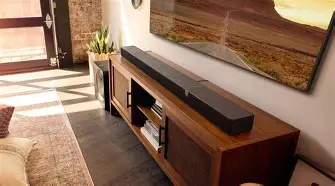
Performance Analysis: Real-World Testing
A soundbar can have the most advanced specs in the world, but if it doesn't deliver in a living room, those specs are meaningless. In our testing, we evaluated the Core 300 across three primary categories: cinematic impact, musicality, and vocal clarity.
Cinematic Impact and Spatial Audio
When playing a Dolby Atmos-encoded film, such as a modern sci-fi epic, the Core 300 demonstrates remarkable "width." The side-firing drivers do a commendable job of pushing the soundstage beyond the physical edges of the bar. During action sequences involving overhead helicopters or falling rain, the height channels provide a noticeable sense of verticality. However, this effect is most pronounced in rooms with flat, standard-height ceilings. If you have vaulted ceilings or heavy acoustic treatments that absorb sound rather than reflecting it, the height effect will likely be diminished.
Musicality and Stereo Imaging
Many soundbars struggle with music, often sounding "boxy" or overly processed. The Core 300 performs better than many of its peers in this regard, thanks to its dedicated tweeters. When playing high-fidelity jazz or classical tracks, there is a surprising amount of detail in the high frequencies. The mid-range, which handles the meat of most musical instruments, is warm and present. However, because the drivers are physically close together, the stereo separation can never truly match that of a pair of well-placed bookshelf speakers.
Looking for the best Electronics deals on Amazon?
Shop Amazon →Vocal Clarity and Dialogue Enhancement
Perhaps the most important feature for the average buyer is the ability to hear what characters are saying over loud background music and sound effects. The Flexus Core 300 includes a dedicated dialogue enhancement mode. This isn't just a simple volume boost; it uses the DSP to isolate the frequency range of the human voice and lift it above the rest of the mix. For those who frequently find themselves reaching for the remote to adjust the volume during quiet conversations, this feature is a significant value-add.
The Comparison: How It Stands Against Competitors
Choosing a soundbar in this price bracket requires a look at the broader landscape. The following table compares the Flexus Core 300 against two other industry standards: a "Premium Lifestyle" bar and a "Pure Home Theater" bar.
| Feature | Flexus Core 300 | Lifestyle Competition | Home Theater Rival |
|---|---|---|---|
| Driver Count | 11 Drivers | 9 Drivers | 13 Drivers |
| Atmos Support | Yes (Up-firing) | Yes (Virtual) | Yes (Up-firing) |
| Subwoofer | Integrated Dual Woofers | Included (External) | Optional Add-on |
| Connectivity | HDMI eARC, Wi-Fi, BT | HDMI eARC, AirPlay 2 | Dual HDMI In, eARC |
| Room Correction | Automatic (Built-in mic) | App-based | Manual/Pro-calibration |
Detailed Pros and Cons
Every piece of technology involves trade-offs. To help you decide if the Flexus Core 300 matches your priorities, consider these strengths and weaknesses found during extensive analysis.
- Pro: Exceptional Build Quality. The materials used in the Core 300 surpass the plastic-heavy designs of entry-level competitors, making it a focal point of the living room rather than an eyesore.
- Pro: Solid Low-End for an All-in-One. While it won't shake the foundation of your home, the integrated woofers provide enough punch for casual movie nights without the clutter of an extra box on the floor.
- Pro: Intuitive Setup. The automatic room calibration works quickly and accurately, adjusting the EQ to compensate for furniture and wall placement.
- Pro: Seamless eARC Integration. The bar wakes up with the TV and responds to the TV remote instantly, reducing "remote clutter" for the user.
- Con: High Sensitivity to Room Placement. Because it relies on reflections, placing it in an open-concept living room with a missing side wall will result in an unbalanced soundstage.
- Con: Price Premium. You are paying for the brand's audio heritage and the premium design. Purely in terms of "decibels per dollar," there are more affordable options with external subs.
- Con: Limited App Ecosystem. While functional, the companion app feels less polished than the software suites offered by some long-standing multi-room audio giants.
The Definitive Buying Guide for the Core 300
Before pulling the trigger on the Flexus Core 300, you need to conduct a lifestyle audit. The "best" electronics are not necessarily the ones with the highest ratings, but the ones that solve a specific problem in your life. Consider the following factors:
Your Room Environment
If your television is in a corner, or if your living room has a cathedral ceiling, the "spatial" features of the Core 300 will be compromised. This soundbar thrives in rectangular or square rooms with standard 8 to 10-foot flat ceilings. The distance from the side walls also matters; if the bar is too far from a wall, the side-firing drivers won't have anything to bounce sound off of, leaving you with a front-heavy soundstage.
Your Content Consumption Habits
Are you a gamer, a movie buff, or a music lover? For gamers, the Core 300 is excellent because it supports 4K passthrough and has low latency, making spatial cues in shooters or open-world games feel accurate. For movie buffs, the Atmos performance is the big draw, provided you have access to high-quality Atmos tracks (via 4K discs or premium streaming tiers). For music lovers, this bar is better than average, but if your primary use case is listening to vinyl or high-res audio in stereo, you might still prefer a dedicated 2.0 or 2.1 system.
The "Wife/Partner Acceptance Factor"
One of the biggest selling points of the Flexus Core 300 is the lack of wires. Many people want great sound but refuse to run speaker wire under rugs or behind moldings to rear speakers. The Core 300 provides a middle ground. It delivers a large sound signature without the aesthetic footprint of a receiver and five satellite speakers. If aesthetics and minimalism are high on your list of priorities, the Core 300 is a top-tier candidate.
Shop the latest Electronics picks on Amazon.
Shop Amazon →Connectivity and Stability
Ensure your television supports HDMI eARC. While the Core 300 will work with a standard HDMI ARC port, you will be limited to compressed audio formats. To get the uncompressed Dolby TrueHD or DTS-HD Master Audio that this bar is capable of reproducing, eARC is non-negotiable. Furthermore, check your Wi-Fi strength near the TV. Smart soundbars require a stable connection for firmware updates and high-quality music streaming via services like Spotify Connect or Tidal.
Advanced Features: Worth the Learning Curve?
The Flexus Core 300 includes several advanced settings that users often ignore, to their detriment. One such feature is the "Night Mode." This compresses the dynamic range, meaning it brings the volume of explosions down while keeping the dialogue at a reachable level. This is perfect for apartment dwellers or parents who want to watch an action movie without waking the household. Understanding how to toggle these features quickly via the remote or app is key to getting the most out of your purchase.
Another often-overlooked aspect is the "Center Channel Focus." In many modern mixes, music and sound effects can swallow the center channel (where the speech is). The Core 300 allows you to manually increase the gain of only the center drivers. Taking five minutes to calibrate this to your specific seating distance can drastically improve your long-term satisfaction with the unit.
Conclusion
The Flexus Core 300 is a sophisticated, well-balanced audio solution that brings premium sound into the modern living room with minimal fuss. It represents a significant step up from standard soundbars, offering a richness and depth that most "budget" or "mid-tier" options cannot replicate. Its primary strength lies in its ability to deliver a wide, atmospheric soundstage and clear dialogue, all while maintaining an elegant physical profile that complements high-end televisions.
However, it is not a universal solution. Buyers who live in unconventional architectural spaces or those who demand the earth-shaking bass that only a 12-inch external subwoofer can provide might find the all-in-one approach of the Core 300 slightly limiting. Furthermore, the premium price point means you are paying for both performance and prestige. If your room is suited for its reflective audio technology and you value a clean, wire-free environment, the Core 300 stands as one of the most compelling options in the current electronic landscape. It is a refined piece of hardware that, when placed in the right environment, transforms the act of watching television into a genuine cinematic experience. Understand your room, know your content, and the Flexus Core 300 will likely serve as the heartbeat of your home entertainment system for years to come.