Difference Between Heipi 3 In 1 Travel Tripod W28S and Fujifilm Instax Wide Evo Explained
The landscape of modern photography is increasingly defined by two divergent paths: the pursuit of technical perfection through stabilization and high-end optics, and the pursuit of nostalgic, tactile experiences through instant film. In the "Cameras" category, few products represent these distinct philosophies better than the Heipi 3 In 1 Travel Tripod W28S and the Fujifilm Instax Wide Evo. While one is an essential accessory designed to support professional-grade imaging equipment, the other is a hybrid camera designed to capture and print memories in a large, tangible format. Understanding the difference between these two items is not about comparing megapixels or apertures; it is about understanding how different tools solve different creative problems.
For the modern traveler, landscape photographer, or digital enthusiast, the choice between investing in a high-concurrency support system or a creative capture device depends entirely on the existing gaps in their toolkit. The Heipi W28S is a marvel of engineering that reimagines what a tripod can be, while the Fujifilm Instax Wide Evo is a landmark release in the instant photography world, bringing digital control to the popular "Wide" film format. This article provides a comprehensive analysis of both products, detailing their features, practical applications, and why a dedicated creator might actually find space for both in their gear bag.
Detailed Product Analysis: Heipi 3 In 1 Travel Tripod W28S
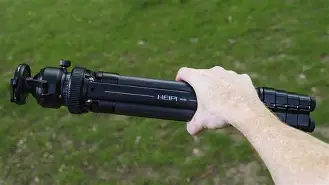
The Heipi 3 In 1 Travel Tripod W28S is often described as a "disruptor" in the tripod market. Traditionally, tripods have been bulky, single-purpose items that photographers tolerate rather than enjoy. Heipi addressed this by focusing on three core pillars: portability, versatility, and stability. The W28S is crafted primarily from carbon fiber, utilizing a unique "3-in-1" design that encompasses a main tripod, a detachable sub-tripod, and a functional ball head system.
What sets the Heipi W28S apart from competitors like Peak Design or Gitzo is the "Nested" design. The center column is not just a pole; it is a fully functional mini-tripod that can be removed and used independently. When nested, these two units work together to provide a vibration-dampening support system that handles heavy full-frame setups. The legs use a lever-lock mechanism that is incredibly fast to deploy, making it a favorite for hikers who need to set up a shot before the light changes. The ball head is equally innovative, featuring a 360-degree independent pan and a click-based adjustment system that allows for precise leveling even in the dark.
In real-world use cases, the Heipi W28S excels in long-exposure photography. Whether you are shooting silk-smooth waterfalls or star trails, the carbon fiber construction minimizes the micro-vibrations that can ruin a shot. The ability to strip the tripod down to its "sub-tripod" component also makes it an excellent choice for vlogging or macro photography where you need to get closer to the ground than a standard tripod allows. It is a tool for the precision-oriented creator who views stability as the foundation of a great image.
Pros and Cons of the Heipi W28S
- Pro: Innovative nested design provides two tripods in one, perfect for multi-camera setups or low-angle shots.
- Pro: Carbon fiber construction offers an exceptional strength-to-weight ratio, supporting up to 55 lbs while weighing very little.
- Pro: The 360-degree ball head includes a unique clicking sound for every 10 degrees, aiding in panoramic stitching.
- Pro: Extremely compact "no-dead-space" folded volume allows it to fit easily inside most standard camera backpacks.
- Con: The price point reflects its premium materials and engineering, making it an investment for serious enthusiasts.
- Con: Leg locks require periodic maintenance to ensure no sand or grit interferes with the sliding mechanism.
Detailed Product Analysis: Fujifilm Instax Wide Evo
The Fujifilm Instax Wide Evo represents the pinnacle of Fujifilm’s "analog-meets-digital" hybrid strategy. While the Instax Mini Evo has been a massive hit, the Wide Evo brings that same versatility to the significantly larger Wide film format. This format is double the width of the Mini, making it much more suitable for group portraits, sweeping landscapes, and artistic compositions that need room to breathe.
The "Evo" designation indicates that this is a digital camera with a built-in printer. It captures images on a digital sensor and allows the user to view them on a rear LCD screen before deciding which ones to print. This solves the primary pain point of traditional instant photography: wasted film. With the Wide Evo, you only print your best shots. However, it retains the tactile charm of the medium. It features a retro-inspired design with a physical "print lever" that mimics the film advance lever of 35mm film cameras. When you pull the lever, the digital image is transferred to the Instax Wide film, emerging from the top of the device with that classic chemical development process.
Furthermore, the Wide Evo is packed with creative filters and lens effects. By rotating the lens ring and the film dial, users can mix and match 100 different combinations of "Lens Effects" (like Soft Focus, Fisheye, or Light Leak) and "Film Effects" (like Monochrome, Retro, or Vivid). This allows for a level of creative expression that standard instant cameras cannot match. It also functions as a smartphone printer, meaning you can send photos taken on your professional DSLR or smartphone to the Wide Evo to be printed on instant film, bridging the gap between digital precision and physical memory.
Shop the latest Cameras & Photography picks on Amazon.
See Deals →
Pros and Cons of the Fujifilm Instax Wide Evo
- Pro: The Large Wide format film is superior for landscapes and group shots compared to the smaller Mini format.
- Pro: Hybrid digital functionality allows you to review and edit photos before printing, saving significant money on film costs.
- Pro: 100 combinations of filters and effects provide endless creative possibilities without needing external software.
- Pro: Smartphone connectivity allows it to act as a portable printer for any image on your mobile device.
- Con: The digital sensor quality is geared toward social media and instant printing, not large-scale digital enlargements.
- Con: The larger body size required for Wide film makes it less pocketable than the Mini series.
Comparison: Functionality and Use Cases
When comparing these two products, we are looking at the Structural Support of photography versus the Tactile Output of photography. The Heipi W28S is a passive tool; it does not take pictures, but it makes difficult pictures possible. It is the silent partner of the landscape photographer. On the other hand, the Fujifilm Instax Wide Evo is an active tool; it is the center of the party, the creator of the physical artifact, and a bridge between the digital and physical worlds.
Consider the professional event photographer. They might use the Heipi W28S to set up a stationary camera for high-quality architectural shots of the venue or long-exposure shots of the ballroom. Once those technical shots are secured, they might switch to the Instax Wide Evo to take candid, fun shots of the guests, handing out physical prints that the guests can take home immediately. In this scenario, the products are not competitors; they are complementary tools that serve different ends of the photography spectrum.
Feature Comparison Table
| Feature | Heipi 3 In 1 Travel Tripod W28S | Fujifilm Instax Wide Evo |
|---|---|---|
| Primary Category | Camera Support / Accessory | Hybrid Instant Camera |
| Primary Material | Carbon Fiber | High-grade Plastic / Composite |
| Portability | Folds to a compact cylinder | Handheld, requires a small bag |
| Core Technology | Nested 3-in-1 stabilization | Digital Sensor + Instant Film Printing |
| Best Use Case | Travel, Landscape, Long Exposure | Parties, Journaling, Gift-giving |
| Weight | Approx. 3.3 lbs (including ball head) | Approx. 1.4 lbs (without film) |
| Creative Control | Physical positioning and leveling | 100 Digital effect combinations |
Buying Guide: Which One Do You Need?
Choosing between an high-end tripod and a hybrid instant camera requires an honest assessment of your current workflow and where you feel your photography is lacking. Most buyers fall into one of three camps: the Technical Perfectionist, the Social Creator, or the Hybrid Artist.
The Technical Perfectionist
If you find that your images are often soft, or you are limited in your ability to shoot in low light or blue hour, the Heipi 3 In 1 Travel Tripod W28S is your priority. A tripod is arguably the most important purchase a photographer can make after their initial camera and lens. The W28S is specifically designed for those who travel. If you have been using a cheap, flimsy tripod that shakes in the wind, the jump to the Heipi W28S will be transformative. You will be able to shoot sharp images at 30-second shutter speeds, experiment with ND filters for long exposures, and utilize the sub-tripod for macro work. It is an investment in the quality of your digital files.
The Social Creator and Journaler
If your photography is about the "moment" and sharing that moment with others, the Fujifilm Instax Wide Evo is the clear choice. We live in an era where thousands of photos sit forgotten in "cloud" storage. The Instax Wide Evo brings back the joy of holding a photograph. Because it is a hybrid, it is the perfect "safe" entry into analog photography. You get the safety net of digital (you can delete the bad shots) with the charm of the Instax Wide film format. It is ideal for wedding guest books, travel journaling, or simply giving a physical gift to a stranger you’ve photographed on the street.
The Equipment Gap Analysis
When deciding, ask yourself: "What is stopping me from taking the photos I want?" If the answer is "My hands are too shaky" or "I can't shoot at night," buy the Heipi. If the answer is "I'm bored with digital files" or "I want to share my photos in person," buy the Instax Wide Evo. For many, the answer is actually both, but the tripod usually takes precedence for those building a professional kit, while the Evo takes precedence for those looking to inject fun back into the hobby.
Advanced Considerations: The Convergence of Gear
In recent years, the distinction between "professional gear" and "lifestyle gear" has blurred. Photographers are increasingly using the Heipi W28S not just for mirrorless cameras, but as a stable base for the Instax Wide Evo itself. Because the Wide Evo has a tripod mount, you can use the W28S to set up perfectly leveled group shots or even attempt long-exposure instant film photography using the Evo's "Bulb" mode (if supported via firmware) or low-light filters.
Find top-rated Cameras & Photography products at great prices.
See Deals →Additionally, the Heipi W28S’s sub-tripod is light enough to be used as a stabilizer handle for the Instax Wide Evo. While the Evo is primarily a stills camera, having a stable hand-grip can help when navigating through its digital menus or when using the smartphone app to trigger a remote print. This synergy highlights the importance of versatile accessories in a modern kit.
For those worried about the longevity of their purchase, carbon fiber tripods like the Heipi are known to last a decade or more if maintained. The Fujifilm Instax Wide Evo, being an electronic device, has a shorter lifespan but offers a unique firmware-driven experience that can be updated. Buyers typically care about "Value Per Use." The Heipi offers value in every serious landscape shot you take; the Evo offers value in every smile you see when you hand someone a physical print.
Conclusion
The Heipi 3 In 1 Travel Tripod W28S and the Fujifilm Instax Wide Evo represent the two lungs of the photography world: Stability and Expression. The Heipi W28S stands as a masterclass in industrial design, offering a multifaceted solution for photographers who refuse to be weighed down by traditional, clunky equipment. Its nested design and carbon fiber build make it a top-tier choice for anybody who values sharpness and technical versatility. It is a tool of discipline and precision.
Conversely, the Fujifilm Instax Wide Evo is a tool of spontaneity and nostalgia. It takes the stress out of instant photography by adding a digital buffer, ensuring that every piece of Wide film used is a piece of film well-spent. Its ability to act as both a camera and a printer makes it one of the most versatile creative devices on the market today. It doesn't care about corner-to-corner sharpness; it cares about the "feeling" of a captured memory.
Ultimately, the difference between these two lies in their purpose. The Heipi W28S helps you take better photos, while the Fujifilm Instax Wide Evo helps you do more with the photos you take. Whether you are climbing a mountain with a carbon fiber tripod or passing around large-format prints at a family gathering, both products represent the best of what modern camera technology has to offer. By understanding these differences, you can better equip yourself with the tools that match your creative vision and your lifestyle.